
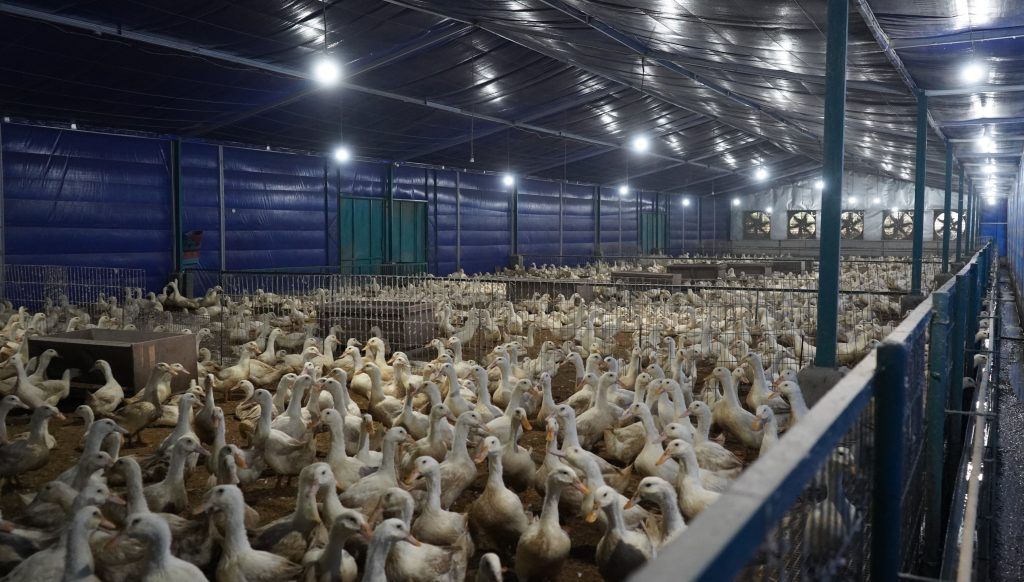
AHPC Study Finds Strong Public Support for and Limited Impacts to Restaurants from Foie Gras Bans
Public Perspectives and Effective Messaging on Foie Gras in the United States
A new study from the Animal-Human Policy Center at Colorado State University examined public knowledge, consumer behavior, and policy support related to foie gras across 10 U.S. states where related legislation is under consideration.
Read the full report here: AHPC Public Perspectives on Foie Gras
Study Overview
Researchers surveyed 5,665 residents (December 2025–January 2026) to assess:
- Public knowledge and consumption of foie gras
- Support for municipal and state bans on foie gras sales and production
- How removing foie gras from menus affects restaurant choice
- How different messages influence support for bans
Survey data were weighted to reflect U.S. Census demographics and political affiliation.
Key Findings
Foie Gras Is Rarely Consumed
- 81% have never ordered foie gras at a restaurant.
- 92% have never purchased it from a store.
- Most consumers report eating it only once or twice per year.
Foie gras remains a niche product consumed by a small minority of Americans.
Removing Foie Gras from Menus Does Not Harm Restaurants
In a randomized menu experiment:
- Including foie gras reduced likelihood of dining at a restaurant by 12 percentage points.
- 61% said they would be more likely to dine at a restaurant that stopped serving foie gras for animal welfare reasons.
These findings suggest that removing foie gras is unlikely to negatively impact restaurant business.
Strong Support for Bans
Across all respondents:
- 89% support banning the practice of force feeding ducks and geese.
- 87% support banning the sale of foie gras produced through force feeding.
- 81% support banning foie gras sales more generally.
Specifying that bans target foie gras produced through force feeding increased support.
Animal Welfare Messaging Is Most Effective
All tested messages increased support for bans compared to a control group, but the animal welfare message alone was most effective—raising support by up to 12 percentage points.
After messaging:
- 94% agreed force feeding causes unnecessary suffering.
- Fewer than 8% believed force feeding can be humane.
Implications
The vast majority of Americans do not consume foie gras and support bans on its production and sale. Messaging focused on animal welfare—particularly when bans are framed as targeting force feeding—further strengthens public support. Findings also suggest that removing foie gras from menus is unlikely to result in economic harm to restaurants.
