Opportunities in the Lab

Lab Philosophy

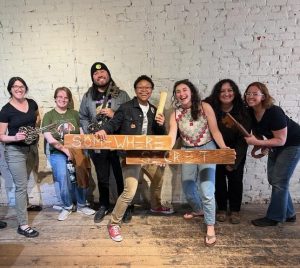
In the Bombaci Lab, we believe that excellence in research and teaching comes from creating teams that are diverse in backgrounds, interests, and talents. We aim to create and maintain a culture of support and respect for diverse perspectives. We value collaboration, communication, creativity, critical thinking, work-life balance, and we support each other's success.

Students that will succeed in the Bombaci Lab will have a passion for conservation or ecology, an interest in learning about or advancing diversity and inclusion and/or working with marginalized communities, will be good communicators, and will be motivated to learn new skills (e.g. field techniques, analytical methods, science communication).

Mentoring Philosophy

Helping graduate students achieve their professional goals is a core part of why I love my job. For each student, success might look different, so I use a mentoring strategy that starts with active communication with each mentee about their professional goals and expectations of what they hope to achieve while in my lab. I use these conversations to guide each student in crafting their own development plan to prioritize training and networking strategies that can help them meet their aims.
Prospective Graduate Students

I will post any funded graduate student positions to this page so check this site regularly if you are interested in joining my lab.

I will only accept graduate students that I have funding for, or that can bring their own grant or fellowship funding, so I also encourage interested gradate students to pursue graduate fellowships they are eligible for (see Fellowship Resources section at the bottom of this page). If you have an interesting research idea that aligns with my research areas, and would like to pursue a graduate fellowship to join my lab, please provide details about your fellowship application plans in a letter of interest to me that also describes why you are interested in joining the lab, how your proposed fellowship research will align with the work in my lab, previous research/field experience, general research interests, and career plans/goals.


We're hiring!

Graduate Research Assistant (M.S) Position: Wildlife Crossing Ecology

Project Context and Objective

This is a two-year, Master's-level research position funded in partnership with the Colorado Department of Transportation (CDOT), advised by Dr. Sara Bombaci (https://sites.warnercnr.colostate.edu/sbombaci) in the Warner College of Natural Resources (https://warnercnr.colostate.edu) at Colorado State University. The core objective of this study is to implement and evaluate novel visual and structural treatments on existing wildlife crossing structures (specifically, double-box culverts, or CBCs) to increase their permeability to wildlife.

The successful candidate will lead research to determine if the application of these modifications affects the usage and crossing success rates of wildlife, particularly deer and other ungulates, through these structures. The findings will directly inform state transportation policy regarding wildlife-vehicle collision mitigation.

Key Responsibilities

The Graduate Research Assistant will execute the following tasks under the direction of the Principal Investigator (PI):

1. Literature Review
Conduct a comprehensive review and synthesis of the current state of knowledge regarding ungulate perception, color vision, wildlife crossing structure design, and the effectiveness of existing CBC treatments.

2. Experimental Site Selection and GIS Analysis
The GRA will utilize GIS to analyze wildlife-vehicle collision (WVC) data, conduct field evaluations of multiple culvert locations on fenced state highways, and finalize the selection of experimental sites.

3. Treatment Implementation and Field Setup
Coordinate with the research team and CDOT to design and physically apply the experimental treatments.

4. Data Collection, Analysis, and Dissemination

· Deploy, maintain, and manage a network of motion-triggered cameras to monitor ungulate presence, movement, and crossing success at all CBCs over a one-year period.

· Process, clean, and rigorously analyze the collected crossing data using appropriate statistical methods to determine the effectiveness of the different paint treatments on facilitating successful ungulate crossings.

· Present research findings in reports and publications.

Required Qualifications

· Bachelor’s degree in Wildlife Biology, Ecology, Environmental Science, or a related field.

· Minimum GPA of 3.0.

· Proven ability to conduct fieldwork in outdoor environments, including remote camera setup and maintenance.

· Strong written and verbal communication skills.

· Strong work ethic.

Desired Qualifications

· Demonstrated proficiency in GIS software or R for spatial data management, analysis, and visualization.

· Experience with statistical analysis (e.g., R, SPSS, or similar).

· Experience with independent research, presentations of research, or publications.

Compensation and Start Date

· Compensation: Competitive monthly stipend based on $36,000 - 38,000 annual salary (DOE), tuition waiver, and health insurance (consistent with university policy for 50% GRA appointments).

· Start Date: Anticipated February 2026.

How to Apply

Applicants should create a single document (e.g., a Word or pdf document) that includes: 1) a brief letter of interest (2 page maximum; describe why you are interested in this position and previous relevant research/field experience), 2) a CV/resume, 3) unofficial transcripts, and 4) contact information for three references. Applications will be accepted until the Feb 1, 2025.

Contact

SARA P BOMBACI

9702173995

sara.bombaci@colostate.edu (preferred contact method)


Undergraduate Students

I welcome motivated undergraduates who are eager to gain experience in research areas in the lab. Please check here regularly for job/internship announcements.

Fellowship and Funding Resources 

For prospective graduate students

For postdocs