
Handprint Challenge Competition 2026
2026 Handprint Challenge Prompt:
Human-Carnivore Conflict and Coexistence in Working Lands
Timeline
Info Session: February 24th, 2026
Application Opens: February 25th, 2024
Proposals Due: March 13th, 2026
Finalists Notified: March 30th, 2026
Competition Day: April 30th, 2026
Competition Information
The Handprint Challenge Competition is an opportunity for undergraduate students to form teams to propose solutions to a pressing global environmental issue: Human-Carnivore Conflict and Coexistence in Shared Landscapes.
To apply, student teams must submit proposals that detail the specific human-carnivore conflict issue they seek to address and the solution they are proposing. Student teams must include three undergraduate students from at least two different colleges. Solutions could include a variety of approaches, such as an invention, new technology, a social enterprise business plan, a new policy, etc. – the more creative the better! Four to six finalists, selected from the pool of proposals, will be given the opportunity to advance to the Competition Day, where they will give a ‘Shark Tank’ style presentation to a panel of judges.
What can you win?
First-, second-, and third-place winning teams will be announced at the conclusion of the Competition Day presentations. Prizes will be divided equally among team members. Winnings are subject to taxes.
First place: $5,000
Second place: $3,000
Crowd Favorites: $1,500 (distributed across categories)
Submit your proposals to Cole.Purdy@colostate.edu and Allison.Brody@colostate.edu by March 13th, 2026. We will notify finalists on March 30th, 2026, with details about Competition Day.
The Handprint Challenge Competition invites undergraduate students to propose solutions that promote human-carnivore coexistence, an issue that impacts environmental health, biodiversity, and human livelihoods, making it essential to create strategies that enable people and carnivores to live together sustainably.
Given the complexity of human-carnivore coexistence, your solution should be transdisciplinary in nature, with a clear vision for how it would be implemented through collaboration across disciplines and with non-academic partners, such as practitioners and community members. Your proposal should include a list of possible stakeholder groups (people or entities that are affected by the coexistence issue), describe what you think matters to them, and explain how your solution finds common ground among these different interests.
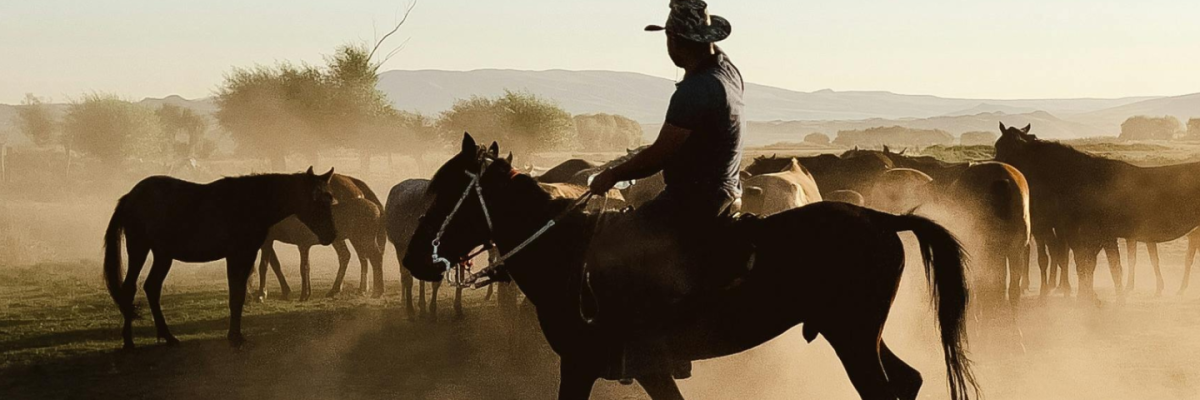
For Spring 2026, students are asked to propose a solution to a specific global wildlife coexistence issue: Human-Carnivore Conflict and Coexistence in Working Lands.
Human-Carnivore Coexistence: Human-carnivore coexistence is a global challenge with an urgent need for real-world solutions. Successful coexistence means finding ways for people and large carnivores to share the same landscapes in ways that support both sustainable carnivore populations and human wellbeing. In reality, this is challenging and necessitates reducing direct conflict between people and carnivores and social conflict between people about carnivores and their management. Throughout history, people and carnivores have often come into conflict, leading to impacts on communities and the killing of carnivores.
One of the most common flashpoints globally is when carnivores prey on livestock, or other animals humans care for. Addressing these challenges requires creative, non-lethal, proactive (i.e., before conflict occurs) approaches that help prevent livestock losses while supporting working wildscapes. Doing so requires innovative thinking, diverse perspectives, cross-disciplinary collaboration, and solutions that consider ecological, social, economic, and political realities.
Info Session: On February 24th, 2026, at 5:00pm, we will hold an info session in Michael Smith Natural Resources Building, Room 345, where you can enjoy pizza while learning more about the competition, seeing example solutions to address carnivore conflict, and meet other interested students to form your team with. After a series of presentations that will help give proposal ideas, there will be opportunities for you to ask questions and share and receive feedback on your own ideas. This will also be an important opportunity to meet other undergraduate students from other colleges in order to meet the two-college-per-team requirement.
Competition Day: Competition day will be held on April 30th, 2026, (location to be decided). During the competition, Handprint Challenge finalists will give a 10-15 minute Shark Tank-style presentation to a panel of judges and an audience. You can do a talk, PowerPoint, video, or presentation format of your choice. Presentations should be creative! Have an invention idea? Share a prototype or a schematic. Creating a social enterprise? Talk through your business plan. After presentations, you will have a 10-minute question-and-answer session with the judges. After all finalists have presented, there will be a social with heavy hor d’oeuvres and industry leaders while the judges deliberate. The event will end with an award ceremony for first-, second-, and third-place winners.
-
The Handprint Challenge is only open to undergraduate students.
-
Teams must include three students exactly.
-
Teams must represent at least two colleges.
-
In order to be considered to present on competition day, teams must submit proposals to Cole.Purdy@colostate.edu and Allison.Brody@colostate.edu by March 13th at 5:00pm.
-
Winnings will be split evenly amongst team members and are subject to taxes (the winning amount shown is before taxes).
-
Competitors must be 18 years of age or older.
Your proposals should, at minimum, include the following three clearly labeled subsections: 1) problem identification, 2) proposed solution (not a research project), and 3) team member introductions. Proposals should be clear, logical, and free of errors.
Solutions should be creative ideas to advance the coexistence of humans with carnivores. You can propose an invention, the development of a social enterprise, a human behavior change campaign, a policy brief, or anything your team can devise to improve coexistence. You can see example solutions on our website and during the info session, which we recommend you attend.
Proposals should highlight your interdisciplinary student team and reflect on how the proposed solution would work in practice, including how non-academic partners (e.g., practitioners, community members, stakeholders) would be involved. Successful proposals will demonstrate students’ comprehension and application of collaborative conservation principles.
Be sure to include:
-
Problem Identification (no more than 1 page): Provide a description of the specific human-carnivore coexistence issue, including the carnivore species, the specific location (e.g., state, country, region, etc.) in which the conflict is occurring, and who the conflict is with. Provide sufficient background on the history of the conflict so that the judges can understand why a solution for coexistence is needed.
-
Proposed Solution (no more than 1 page): Provide a description of the solution you will be proposing to reduce conflict and facilitate coexistence in the context you’ve identified. Research and be familiar with all aspects of your solution, whether it includes engineering, business, ecology, law, or any other creative intervention. Be sure that the proposed solution and the approach to implement the solution clearly articulates transdisciplinary and collaborative approaches. If you include a figure or diagram, this will not count toward the page limit.
-
Team Member Introductions (no more than 1/2 page): Introduce the team members, including their colleges, majors, how they supported the proposal, and what their roles in this project will be.
Team composition |
Does the assembled team include three students from two colleges? |
Y/N |
Proposal organization |
Did they identify a clear coexistence challenge? |
|
Was the background information sufficient to assess the proposed idea? |
||
Was the proposal organized logically and free of errors? |
||
Proposal content & impact of solution |
Does the proposal present a feasible real-world solution? |
|
Is the solution creative and innovative? |
||
Integration |
Are relevant non-academic partners and/or affected communities clearly identified? |
|
Does the proposal outline how collaboration with communities or practitioners could inform and shape the solution or support real-world implementation? |
||
Team roles |
Does each team member have a defined role/contribution? |
|
Was it clear from the proposal that each team member participated? |