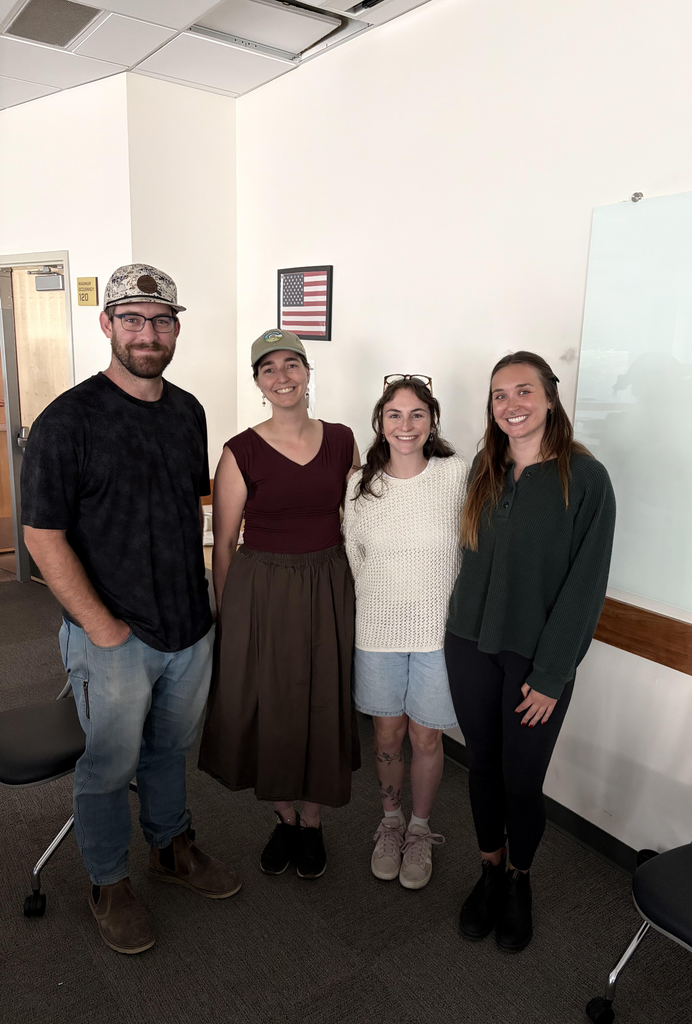
Alexis was invited to sit on a career panel for the Ecosystem Science and Sustainability undergraduate class ESS 120: Intro to Ecosystem and Watershed Sciences at CSU. Alexis discussed her career path from undergraduate to masters, to PhD candidate, identified key skills required in her field, both issues and opportunities that she faces, what was her inspiration to pursue a career in conservation, and advice for the current students. The lab celebrates Alexis’ continued connection to the CSU community and her consistent efforts to uplift others and fulfill our land grant mission.
The next CTRN meeting has been announced for Wednesday, October 28 at 12:00 p.m. MT. Please see the CTO invitation and meeting links below.
Dear CTRN Participant,
I’m reaching out on behalf of the Colorado Tourism Office to invite you to participate in the Colorado Tourism Research Network, a growing group of faculty, researchers, and tourism industry partners interested in strengthening connections between Colorado’s universities and the tourism industry.
The network was launched earlier this year to create a space for sharing tourism-related research, building relationships across institutions, and identifying opportunities for greater collaboration between academia and the industry. Following our first meeting, we also identified an opportunity to broaden the conversation beyond research and explore practical ways universities can become more connected with destinations and tourism organizations across the state.
For participating faculty and researchers, the network offers opportunities to:
Connect with destinations and tourism organizations across Colorado
Explore joint research and student project opportunities
Help connect students with internships and hands-on industry experience
Exchange ideas and build relationships with other tourism researchers across the state
We’d love to have you join us for our second Colorado Tourism Research Network call on Wednesday, October 28 at 12:00 p.m. MT. We’ll welcome new participants, build on the discussion from our first meeting, and continue exploring opportunities for stronger university-industry partnerships.
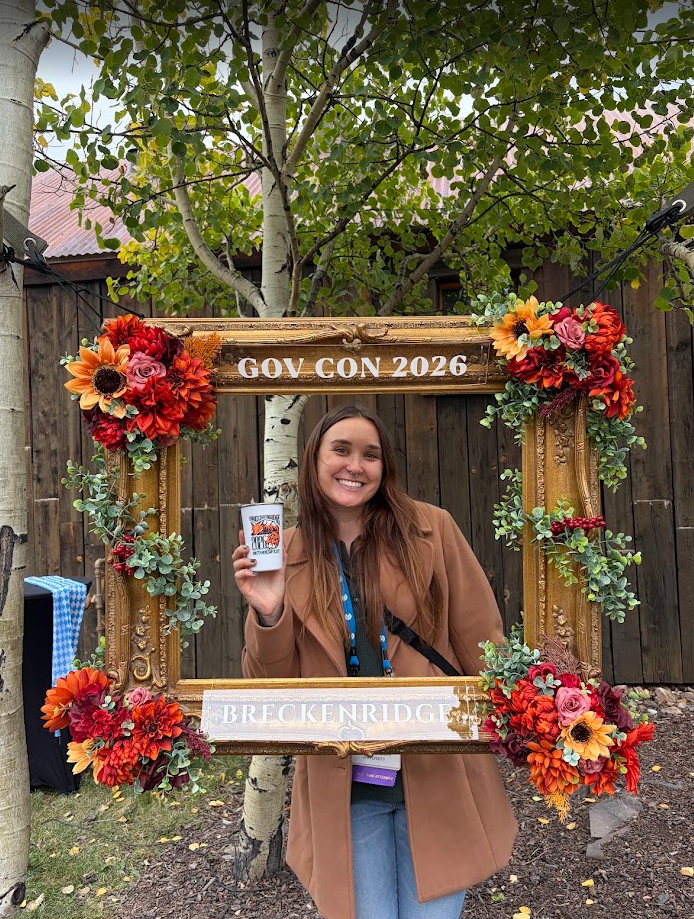
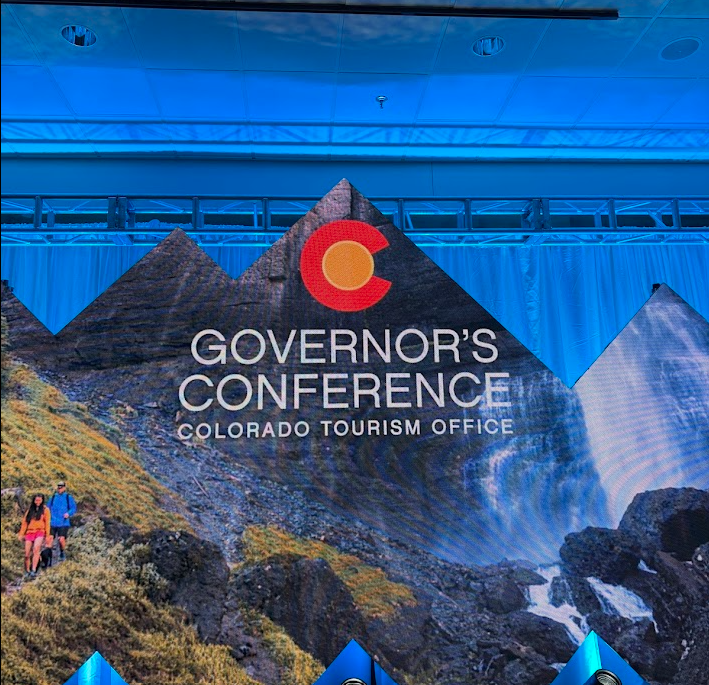
Alexis attended the Colorado Governor’s Tourism Conference from September 23-25 in Breckenridge Colorado. Alexis’ participation was supported by the Colorado Governor’s Tourism Conference Student Scholarship! This conference provided the opportunity to engage with topics like “Purpose meets place: Rethinking the visitor-community relationship,” “Stewardship in Action: From Strategy to on-the-ground action,” “Good for Business: Two ways for Colorado’s Tourism Business to Start their Stewardship Journey,” and many many more engaging topics!
A giant thank you to the Colorado Tourism Office for this opportunity, the Breckenridge Tourism Office for hosting this grand event, The Cavaliere Critical Conservation Lab for supporting Alexis’ attendance, The Colorado Tourism Research Network for sharing information, and all the speakers, attendees, and critical minds that contributed. Colorado’s destination stewardship initiatives are supporting great strides in tourism planning while sharing both successes and challenges along the way. The lab is proud of how Alexis continues to apply herself throughout her PhD journey and consistently strives to learn all she can.
Human Dimensions of Natural Resources The Cavaliere Critical Conservation Research Lab
Dr. Christina T. Cavaliere is recruiting for a Graduate Teaching Assistantship to support a doctoral student starting August 2027. Dr. Cavaliere is a tenured Associate Professor, conservation social scientist and international sustainable stewardship specialist with a focus on tourism impacts and biocultural conservation. She directs The Cavaliere Critical Conservation research lab at Colorado State University in the department of Human Dimensions of Natural Resources (HDNR) housed within the Warner College of Natural Resources (WCNR).
The Cavaliere Critical Conservation lab’s mission is to advance biocultural conservation research by centering subjugated intersectional knowledges. By employing critical ecofeminist and posthumanist methodologies, the research engages affective, sensory, aesthetic, and emotional dimensions of place‑based knowledge. The lab seeks to illuminate the nuances of biocultural identities to strengthen justice, ecological resilience, and regenerative human–nature relationships for wellbeing.
The successful PhD applicant for this position would work in the lab and pursue an independent research project related to Dr. Cavaliere’s researchon tourism and biocultural conservation. The student should be interested in pursuing research in the lab that centers tourism, conservation, and intersectional power structuresas related to protected areas, wildlife, equity, recreation, gender, climate change, sustainability, policy, and/or governance. See the lab’s blog for more information.
The PhD position would include annual tuition support and funding through a Graduate Teaching Assistantship within the department. The successful applicant will be offered support for the first year and then reviewed annually to determine future funding. The applicant must have previously obtained a master’s degree with a research thesis in an area related to tourism and conservation and have experience with qualitative and quantitative methodology.
Prospective students should email application materials to Dr. Cavaliere at christina.cavaliere@colostate.edu by 15 February 2027. To ensure full consideration please include separate PDFs of the following materials labeled using the numbers below. Only applicants selected for interviews will be contacted.
Academic CV
Academic writing sample: (thesis and/or a published article)
Graduate Record Examination (GRE) results
Unofficial bachelors & masters transcripts (master’s degree in related area required)
Cover letter (address how previous experience is related to lab mission)
Research Proposal (address lab mission: 3-pages and academic reference list)
Congratulations to Alexis Foster who was awarded Colorado Governor’s Tourism Conference Student Scholarship. This scholarship is given by the Colorado Tourism Office to university students to support their attendance at the Governor’s Tourism Conference. This is an annual three-day event for tourism professionals, academics, and industry leaders to share best practices and network. This scholarship will support Alexis’ engagement at the event held in Breckenridge, Colorado. The Cavaliere Critical Conservation Lab is excited to celebrate Alexis’ fieldwork that integrates inquiry regarding the Colorado Destination Stewardship Strategic Plan. Dr. Cavaliere and Alexis view this scholarship opportunity as an example of the informational networking benefits shared amongst the newly established Colorado Tourism Research Network.
For more information here is the link for the conference
Congratulations to Alexis Foster! Alexis was selected to receive financial support through the HDNR Rough Patch Rescue Fund for 2026. This fund was established by HDNR’s alumni, Dr. Harry Zinn, and is designed to support students with financial aid. Alexis received $500 in assistance through the generosity of Dr. Zinn, the HDNR department, and the HDNR Rough Patch Rescue Fund.
The lab is continuously proud of Alexis’ work in securing external funding. This award will in-part support Alexis’ field component of her doctoral research in Colorado. The lab is deeply appreciative of the department, donors, and support systems like Dr. Zinn and HDNR. Congratulations again Alexis!
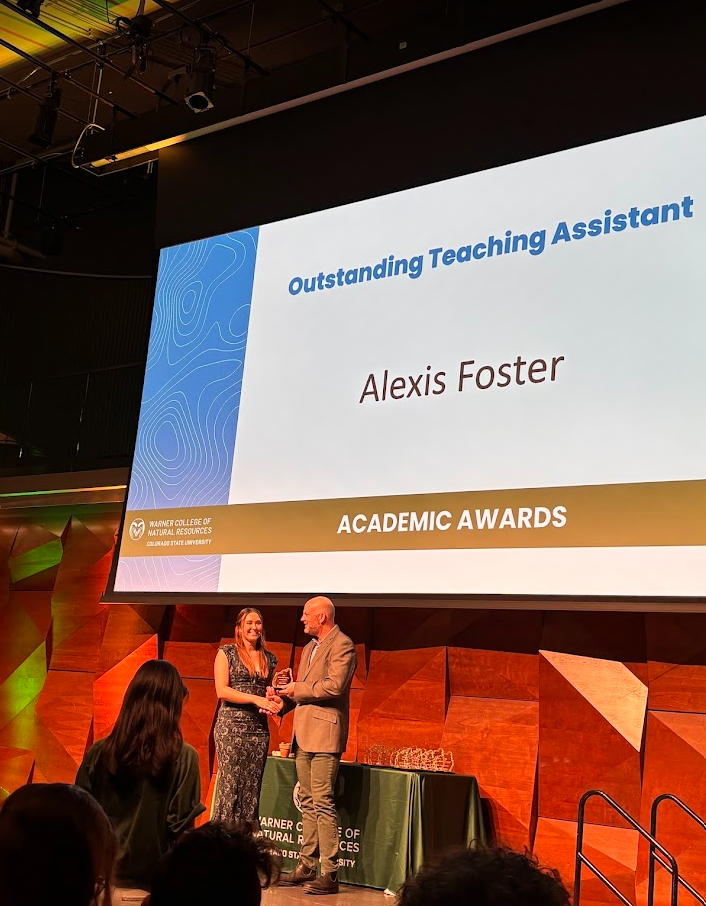
Congratulations to Alexis Foster, she received the Warner College of Natural Resources Outstanding Teaching Assistant Award! Alexis was nominated from multiple faculty members for this award which is given to a student who “served as a teaching assistant in one or more classes offered by a member of Warner College for outstanding performance as a teaching assistant.”
In recognition of her accomplishments, Alexis will receive $500, an inscribed award, and will have a slide recognizing her achievement in the Natural Resources Building Atrium for the upcoming year.
The lab is incredibly proud of Alexis and is delighted that she is being recognized for her dedication and commitment to every aspect of her professional career here at Colorado State University. Congratulations to Alexis and the HDNR department for this wonderful recognition!
The All-College Awards Ceremony on 20 April 2026 was a fantastic event
Are you conducting tourism research in the state of Colorado? Are you interested in learning more about the Colorado Destination Stewardship Strategic Plan? Join the new Colorado Tourism Research Network (CTRN)! Click here to join the Doodle Poll for the first CTRN meeting.
Colorado State University’s Dr. Christina T. Cavaliere was recently featured in The Rocky Mountain Collegian in an article by student reporter Katya Arzubi. In the interview, Dr. Cavaliere discusses how tourism impacts local communities and ecosystems. She highlights Colorado’s new Destination Stewardship Strategic Plan, where she serves as a committee advisor. Her insights connect directly to her broader research in biocultural conservation and tourism planning. Click here to read the article!
In Spring term 2026, Dr. Cavaliere is on academic sabbatical! She will be collaborating with two international universities and continuing community-based research in Colorado through The Cavaliere Critical Conservation Lab at CSU. Dr. Cavaliere will be continuing her established partnerships with the University of Oulu in Finland and with the University of Johannesburg in South Africa. Please note that Dr. Cavaliere will resume normal student advising, teaching, and administrative duties as of Fall term beginning 15 August 2026. Please recontact the Lab then if you have specific inquiries.