We have been conducting research on policy and governance factors that influence post-wildfire response and recovery across the West. This research has led to investigation of programs intended to aid communities and governments, including: the Emergency Watershed Protection (EWP) program, the Burned Area Emergency Response (BAER) program, the Burned Area Recovery (BAR) program, the Emergency Forest Restoration Program (EFRP, and the associated FEMA related programs (Public and Individual Assistance programs, Hazard Mitigation Grant Program (HMGP), and Fire Management Assistance Grants (FMAG). Additionally, we conducted research on public perspectives of the fire to help inform future communication techniques and approaches to forest and fire management.
Policies and Programs that Govern Post-Wildfire Response and Recovery
We investigated policies and programs that govern post-wildfire response and recovery through the investigation of two case studies: The Cameron Peak/East Troublesome fires and the Hermit’s Peak Calf Canyon Fire.
Carney, Clint P., Courtney A. Schultz, and S. Michelle Greiner. 2025. “Complexities in Post-Wildfire Governance: Lessons from Colorado’s 2020 Wildfires.” Fire Ecology 21 (1): 4. https://doi.org/10.1186/s42408-024-00344-1.
Buettner, William C., and Courtney A. Schultz. 2025. “Governing across Jurisdictions in Post-Wildfire Response and Recovery: An Analysis of the 2022 Hermit’s Peak Calf Canyon Wildfire.” Journal of Environmental Management 381 (May): 125272. https://doi.org/10.1016/j.jenvman.2025.125272.
Residents’ Perspectives on Communication and Management Strategies During the Cameron Peak Fire
The 2020 Cameron Peak Fire burned more than 200,000 acres of public and private land west of Fort Collins, Colorado. Extreme and unpredictable fire behavior was driven by dense and dry fuels, steep terrain, high temperatures and winds, and other factors, which greatly affected the range of potential management strategies. Many different communities were affected by the fire from smoke, repeated and long-term evacuations, emotional distress, and property impacts.
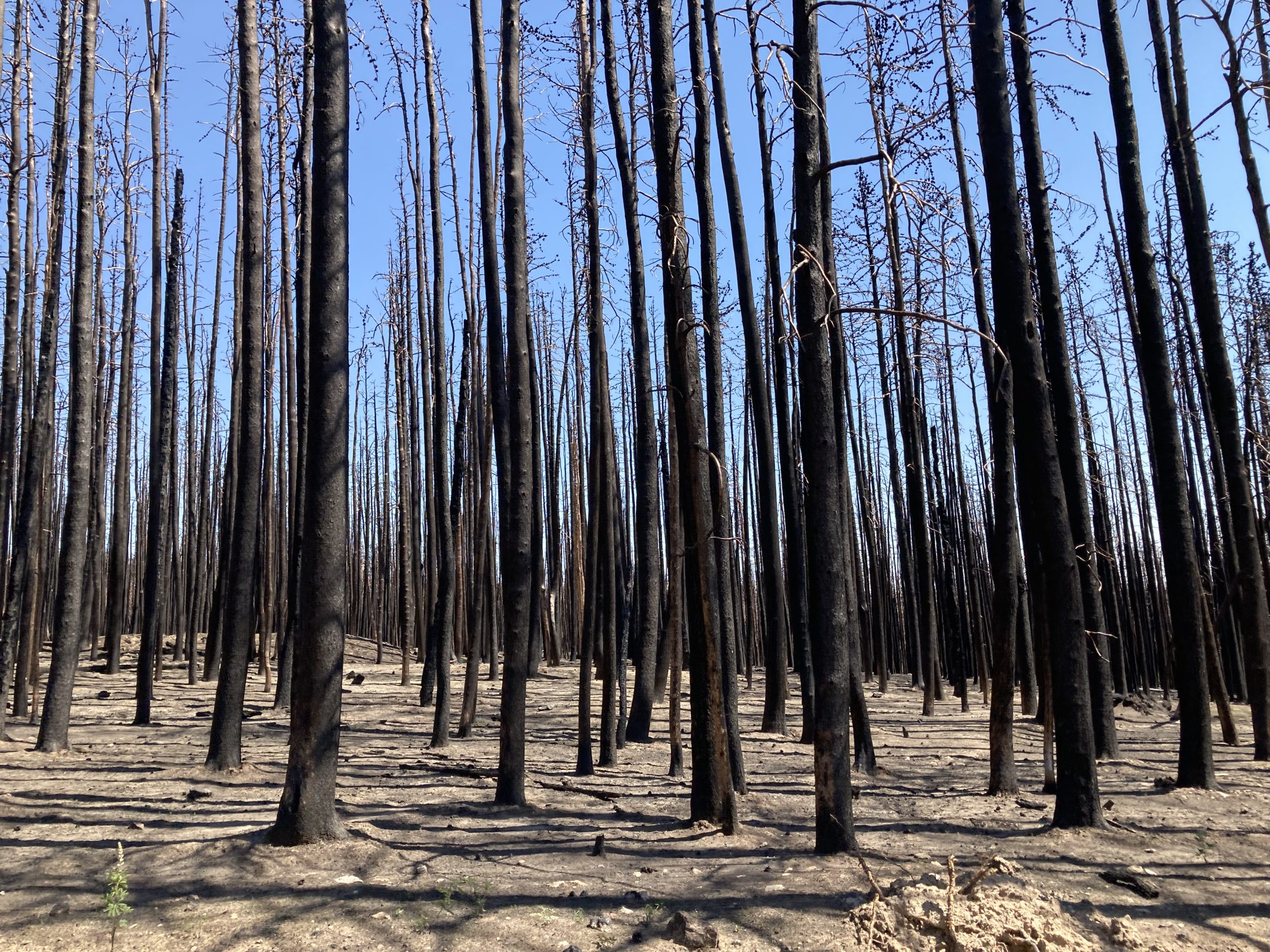
Above: Area impacted by the Cameron Peak Fire. Photo by Chad Kooistra.
See our Project Overview for more information.
View the recording of our January 19, 2022 webinar below for an overview of our main research findings. To see presentation slides from the webinar, click here. If you prefer to watch on YouTube, click here.
A research brief and manuscript will be posted here when they become available.