Julia R. Branstrator Advances to PhD Candidacy

It is with great enthusiasm that the Tourism and Conservation Lab announces that Julia R. Branstrator, lead graduate student within the lab, has advanced from PhD student to PhD candidate! On April 25th, 2022, Julia presented her dissertation topic of “Embodying Changes Through Crises: Exploring Western Gateway Resident Identities”. This research recognizes and studies the unique experiences of intermountain western gateway residents during intersectional crises such as the COVID-19 pandemic, wildfires, and sociopolitical conflict within a remote mountain community.

Stoker at al. (2021) define western gateway communities as, “communities of 150 to 150,000 people that are: 1) within 10 linear miles from the boundary of a national park, national monument, national forest, state park, wild and scenic river or other major river, or lake and 2) further than 15 miles from a census-designated urbanized area by road” (2021, p.23). This description is applied specifically to intermountain gateway communities within the United States bordering national and state parks and protected areas. I-West explains that, “The Intermountain West region of the U.S. is composed of states with shared geographical, environmental, and demographic attributes that present a broad spectrum of carbon neutral energy opportunities” (I-West, 2022, para.1).
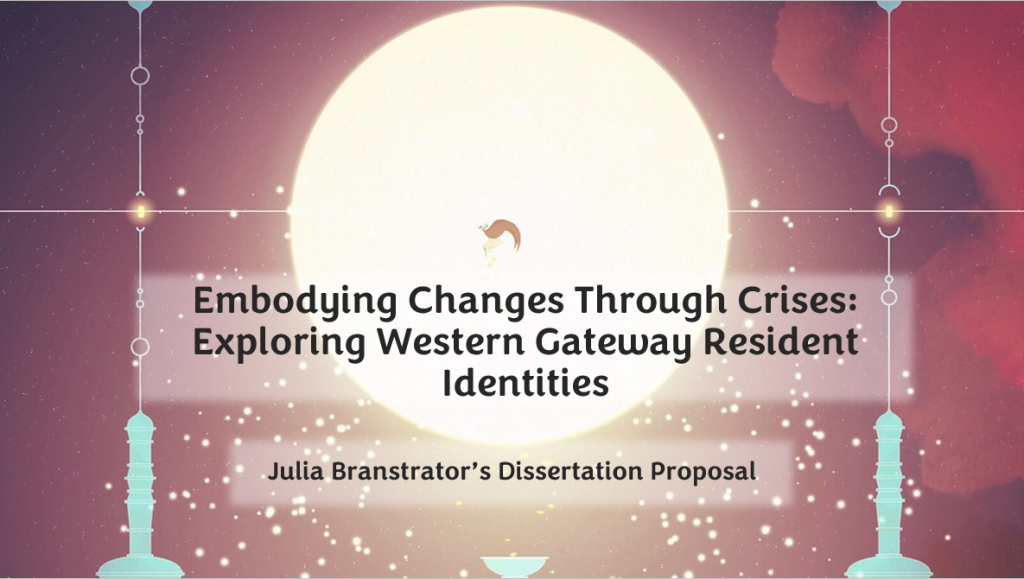
The cover slide opening Julia Branstrator’s dissertation proposal

Through concepts of identity, affect, and technology use, Julia will be exploring the relationships between changes experienced by intermountain western gateway residents hosting a tourism economy during crisis. Her research takes place within the creative community of Nederland, Colorado – an intermountain western gateway community bordering many forests and outdoor recreational areas within Western Colorado.
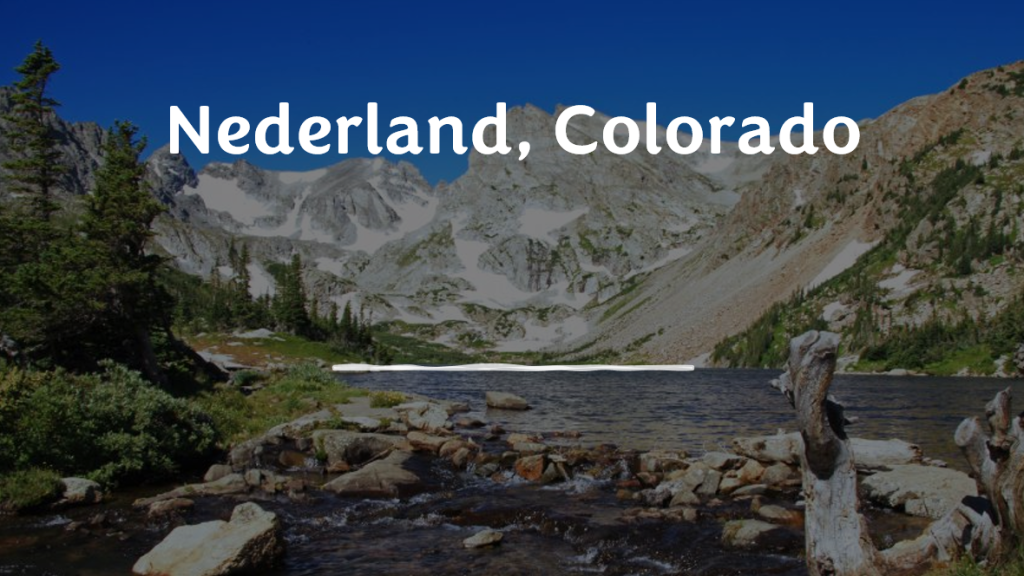
Julia will engage with the residents of Nederland, Colorado within her research
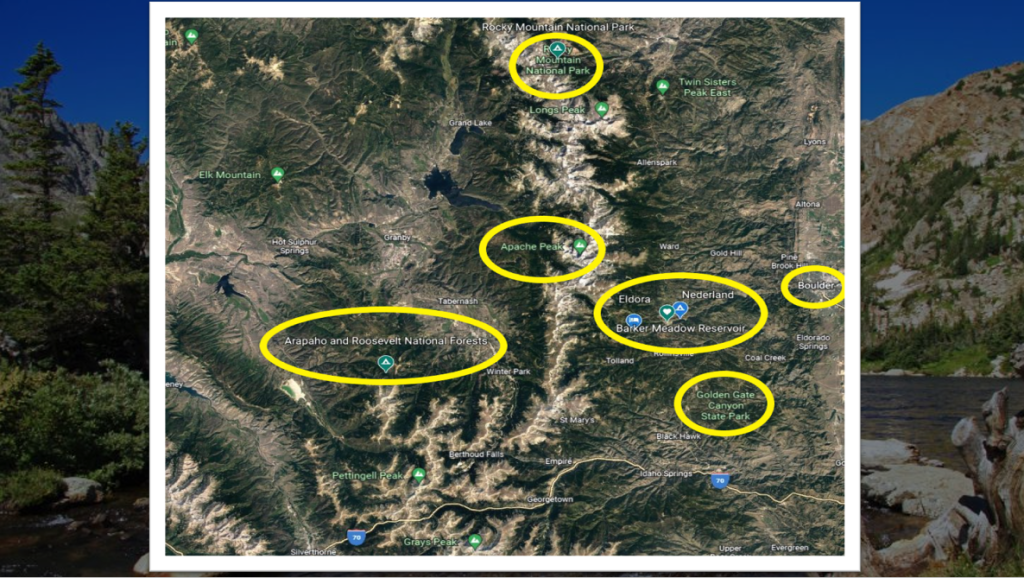
The many parks and protected areas surrounding Nederland, CO within the intermountain west are circled within Julia’s proposal

References

I-West. (2022, April 11). About – i-west. I-West. Retrieved May 6, 2022, from https://iwest.org/about/

Stoker, P., Rumore, D., Romaniello, L., & Levine, Z. (2021). Planning and Development Challenges in Western Gateway Communities. Journal of the American Planning Association, 87(1), 21–33. https://doi.org/10.1080/01944363.2020.1791728
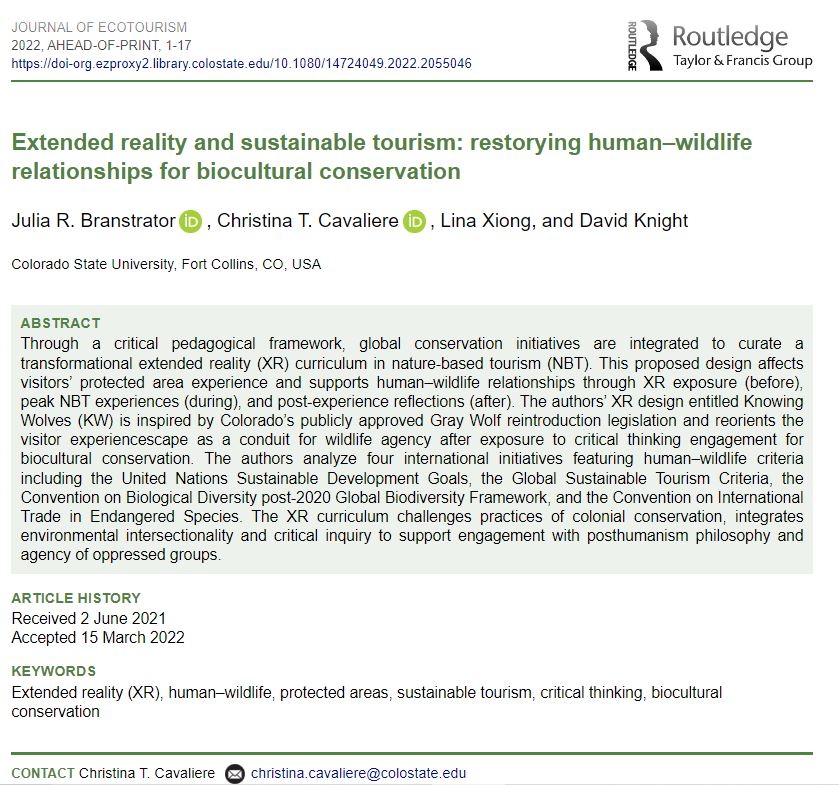
New Publication in the Journal of Ecotourism

As the prima scholar in the Tourism and Conservation Lab under Dr. Christina T. Cavaliere’s advisory, I am excited to share the news of my first ever publication! Prior to my time at Colorado State University, the publication process of academia was alien to me. However, after seeing promising growth within my writing within research and coursework, Dr. Cavaliere offered the role of first author for our (now published) manuscript on extended reality and sustainable tourism. I had first expressed interest in this topic building from my graduate studies in sustainability, innovation, and technology from Purdue University. However, I was uncertain of the direction my research interest within sustainability, extended reality, and tourism could take direction. Dr.’s Cavaliere and Xiong had previously presented work on programs for healthy relationships to wildlife within tourism encounters, and offered a lead position and mentorship to create a manuscript building up their knowledge.

This experience was a pinnacle experience in my growth as a PhD student through my advancement to candidacy. Acting as first author, I became more experienced within the content, my positionality to the research, and how this shaped the topic progression. I became familiar with regular research meetings with co-authors as collaborators, and how collaboration provides deep strength to the research process. Finally, I had fun writing about a topic that bridged my own passions within sustainability and biocultural conservation in tourism.

Dr. Cavaliere and Julia Branstrator, newly confirmed PhD candidate within the Human Dimensions of Natural Resources Department, are delighted to present the latest publication under Dr. Cavaliere’s Tourism and Conservation Lab! The publication, Extended reality and sustainable tourism: Restorying human–wildlife relationships for biocultural conservation, was a collaborative effort by authors Julia Branstrator, Dr. Cavaliere, Dr. Xiong, and Dr. Knight of Colorado State University.

I am grateful to Dr. Cavaliere’s directorship of the lab creating this opportunity. Through the guidance of my research team, I learned from regular feedback and different perspectives. It is my hope to provide similar opportunities for others in the future to honor and reciprocate the mentorship that has been shown to me.

I hope you enjoy this article! If you have any questions, we welcome your feedback.

Julia R. Branstrator
PhD Candidate in Dr. Cavaliere’s Tourism and Conservation Lab
Human Dimensions of Natural Resources Department
Colorado State University