

Previous Education:
B.A. Earth and Oceanographic Science with Music Minor, Bowdoin College, 2025
Advisor: Ellen Wohl
Email: inga.dovre@colostate.edu
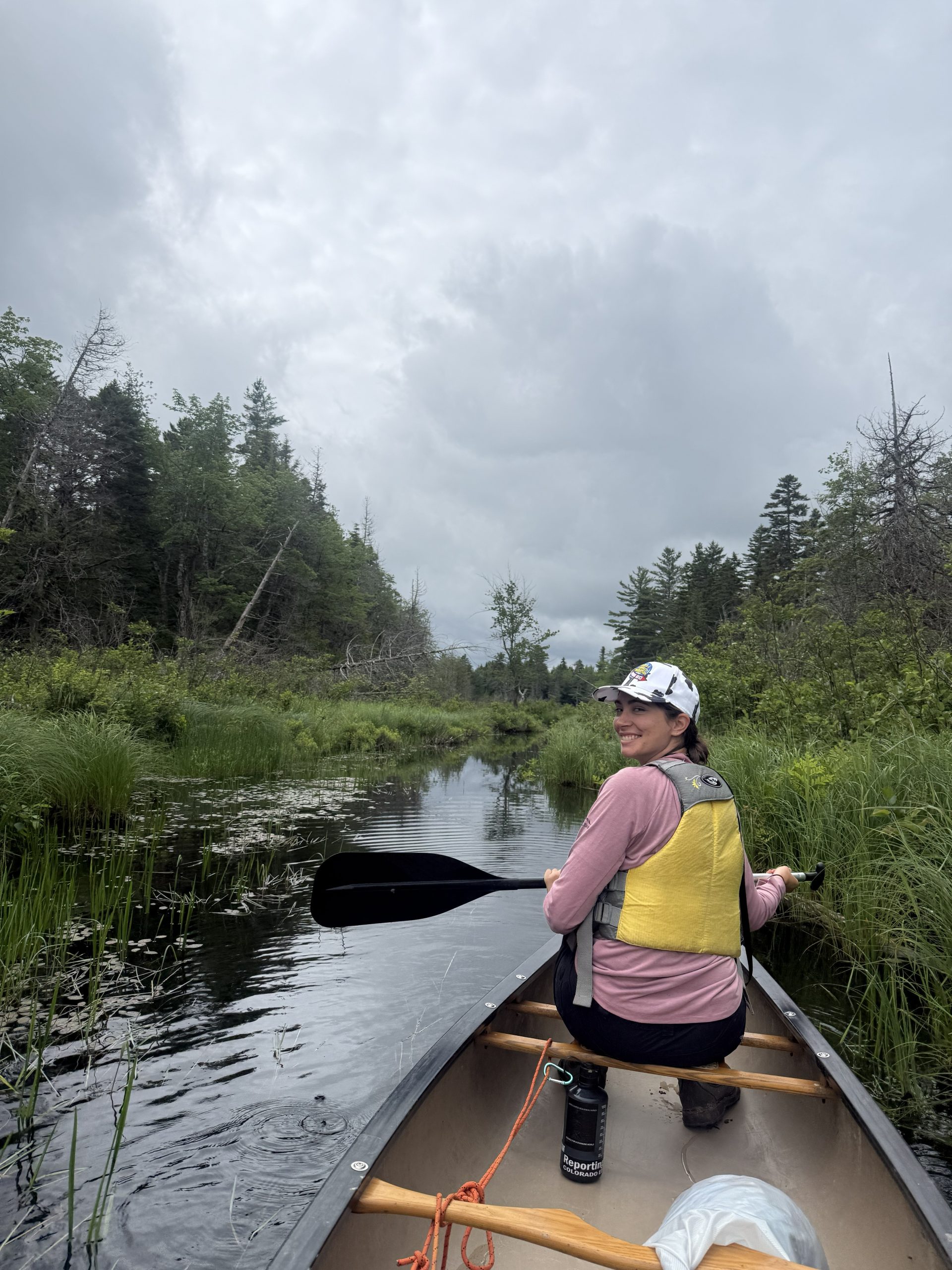
About Me:
Old Man’s Creek, a couple blocks from my home in rural Iowa, is where I first started following water. Running along the top of the bank, following deer tracks on its mud bars, and splashing echoes under the bridge sparked my desire to learn all I could about rivers.
I took this desire to Bowdoin College, where I majored in Earth and Oceanographic Science. While doing a semester abroad in New Zealand, I worked on a GIS analysis of gully erosion and restoration efforts, finding strong evidence that revegetation is linked to a decrease in erosion. Presenting this research to Māori leaders and conservationists confirmed my interest in how rivers and humans change each other. I concluded my time at Bowdoin with a thesis on the long-term geomorphic impacts of two large flood-control dams on the Des Moines River.
After graduating, I worked for a small stream-restoration company based in Portland, Maine. I fought my way through alder swamps, got chest deep in leach-infested waters, swallowed dozens of black flies, and decided I wanted to do some more fieldwork! In all seriousness, it was an exceptional opportunity to learn about fluvial geomorphology and how people are using science to improve our stewardship of watersheds.
Research Focus:
I am excited to get to work on mountain streams for my master’s research. Wood, such as logjams, is a crucial piece of a catchment’s resilience to the negative impacts of wildfires. Consequently, many restoration efforts seek to add wood to catchments before and after potential wildfires. My research will focus on examining the location and characteristics of logjams in unburned catchments to promote effective restoration and wildfire mitigation practices.